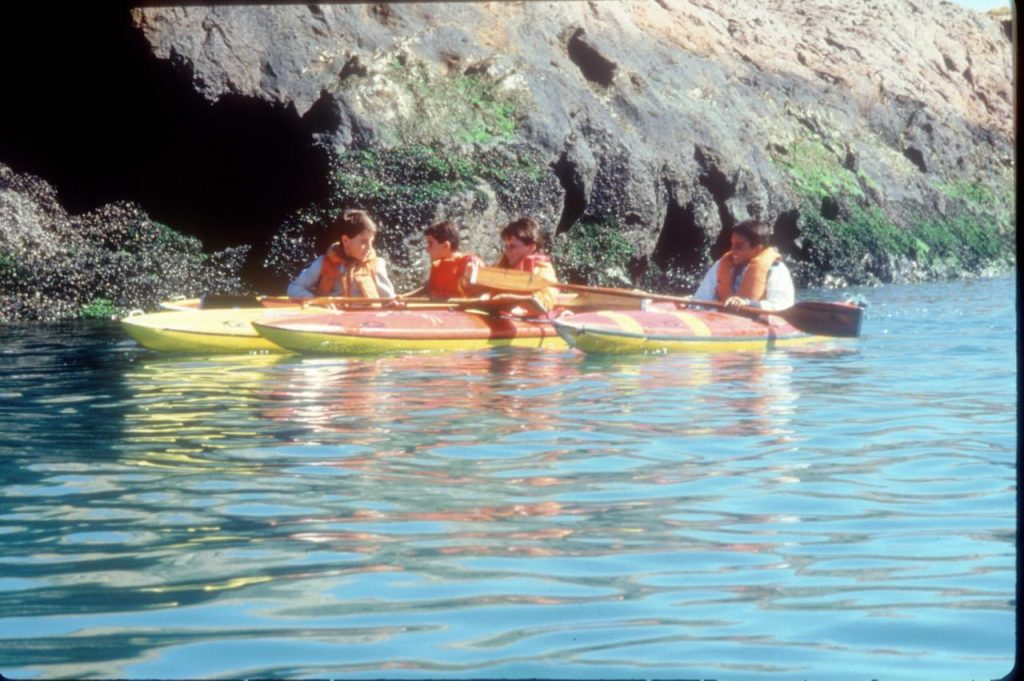
My story with kayaking began when I was no more than six years old, in Puerto Deseado, a small town on the Atlantic coast of Argentine Patagonia. Marcos Oliva Day, a sailor, explorer, and educator, taught me far more than how to move through the water.
Through Club Capitán Oneto and what would later become “Fundación Conociendo Nuestra Casa,” I discovered that paddling was a way to understand nature, explore our surroundings, and connect with others.
Marcos shared an idea that would stay with me throughout my life: “You cannot protect what you do not know.”
Kayaking was his way of introducing us to the Ría Deseado estuary, its history, extraordinary wildlife, and ecosystems. We learned to observe and appreciate the place where we lived. Knowing it was the first step toward belonging and learning to protect it.
Over the years, paddling became my profession. First came rafting, whitewater rivers, and Patagonian expeditions. Later came Frontera Sur and our sea kayaking trips in Los Alerces National Park, where we have worked since 2009.
My connection with the American Canoe Association opened a new chapter. Its training framework helped me organize knowledge gained in the field, question my practices, improve my methods, and approach teaching and risk management more systematically.
When I became an ACA Level 4 instructor in 2010, I promised Marcos, my mentor, that I would return to the foundation to share what I had learned with younger paddlers. He passed away before I could fulfill that promise, but in 2022 I returned to Puerto Deseado to teach an ACA Level 3 course. It was deeply moving: giving back some of what I had received and passing it on to a new generation.
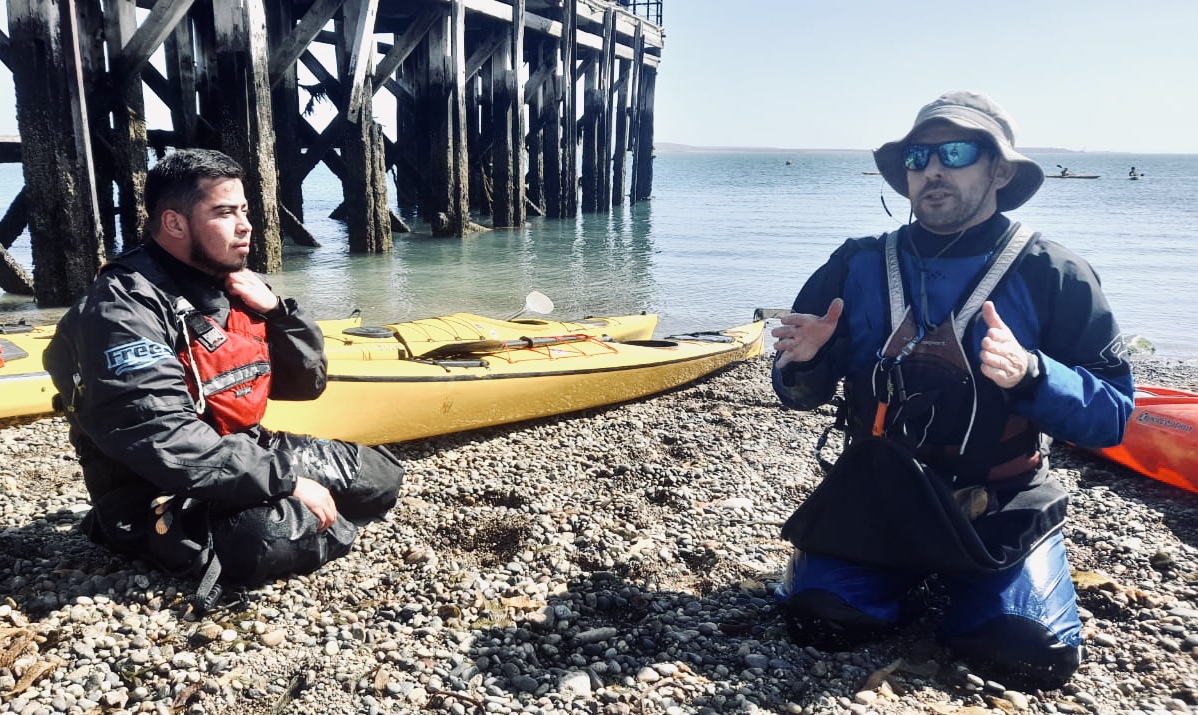
Teaching an ACA Level 3 course in Puerto Deseado, Argentina, in 2022.
I learned that being a good paddler does not necessarily mean being a good educator. Teaching requires understanding people, communicating, listening, and accepting that we, too, are always learning.
Kayaking took me farther than I ever imagined. I paddled solo in Greenland and Alaska, explored Patagonian fjords and rivers, and worked as a polar expedition guide in Antarctica. Yet my most important memories are the people I met, the cultures I discovered, and the moments shared in extraordinary places.
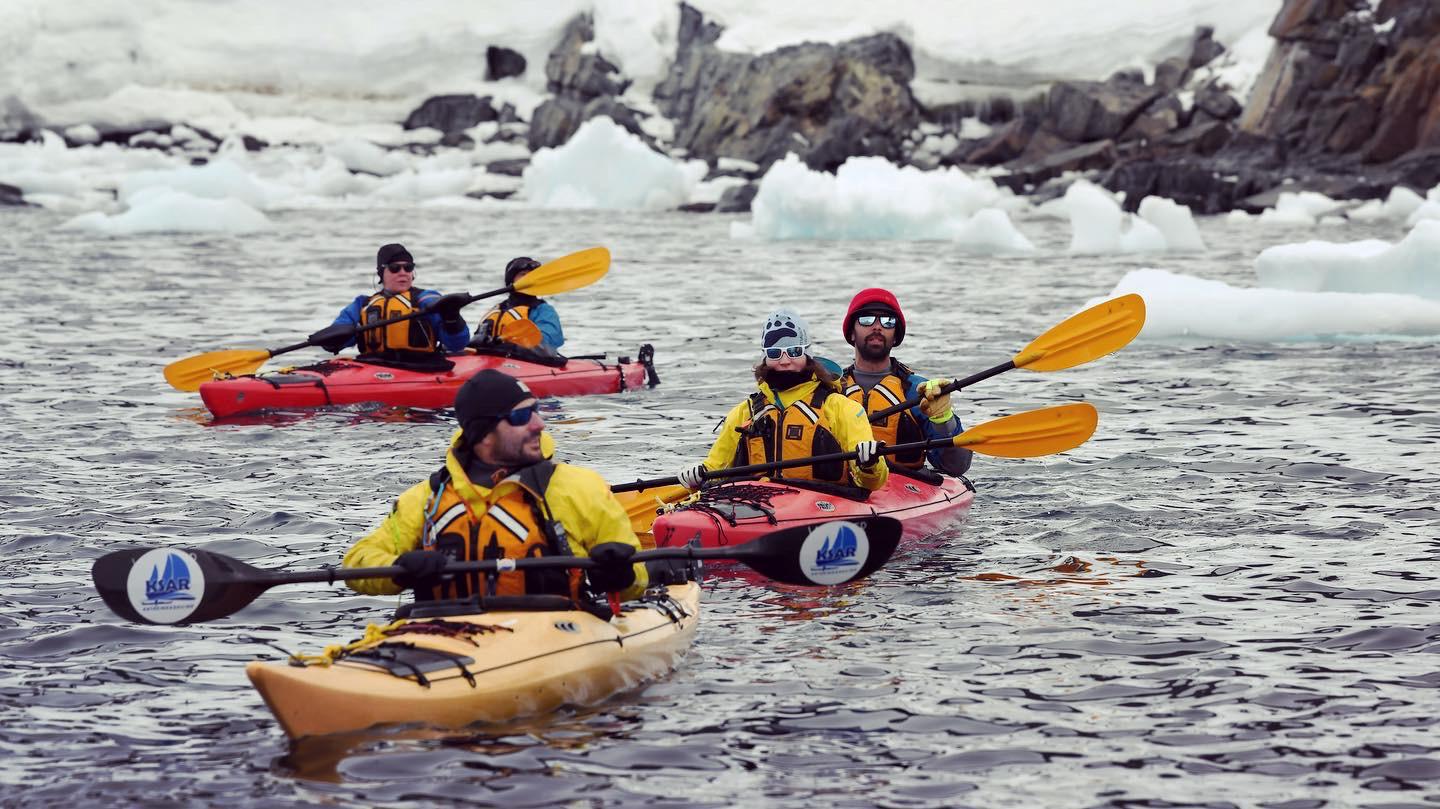
Guiding a sea kayaking group in Antarctica.
After more than four decades of paddling, I better understand how Marcos and kayaking have shaped my life. His legacy went beyond teaching us to paddle: he showed us that kayaking could be a tool for education, connection, and transformation.
That is the responsibility I feel when training new guides or accompanying someone on their first experience on the water.
Paddle to discover. Discover to teach. Teach to connect.
For me, that is the true meaning of kayaking.
Author Bio
José Martín Capllonch is an ACA Level 4 Open Water Coastal Kayaking Instructor from Patagonia, Argentina, with more than four decades of paddling experience. He has guided whitewater rivers and sea kayaking trips in Los Alerces National Park and worked as a polar expedition guide in Antarctica. In 2022, he returned to his hometown of Puerto Deseado to teach an ACA Level 3 course, keeping a promise to the mentor who first put him in a kayak.
This story is published as part of the 2026 ACA Story Project, a month-long collection of stories written by ACA members. Without opportunity, these stories wouldn’t exist. That’s what the ACA does. Through education, stewardship, competition, and club support, we create opportunities for paddlers of all abilities. Your gift helps write the next chapter. Help us raise $25,000 by December 1 for the next paddler, and the one after that.