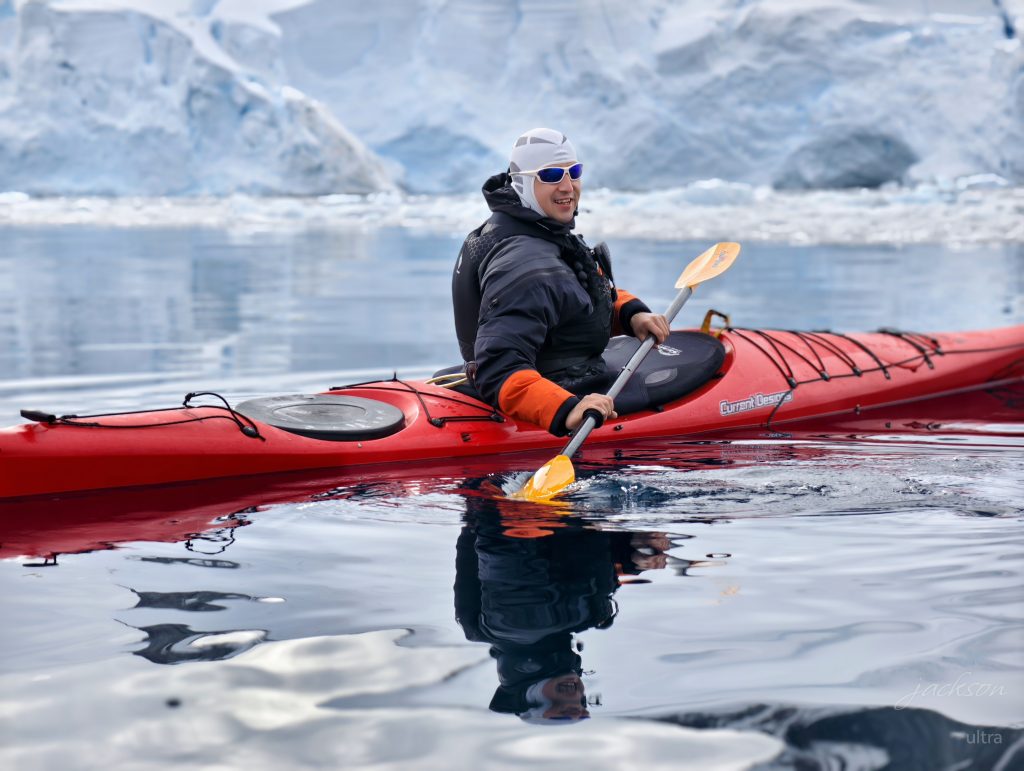
I first sat in a kayak when I was about ten years old, far from my home at the southern end of Chile.
I grew up in Puerto Williams, a small and extremely isolated community on Navarino Island, near Cape Horn. At the time, kayaks were almost nonexistent there. To me, they might as well have been spacecraft.
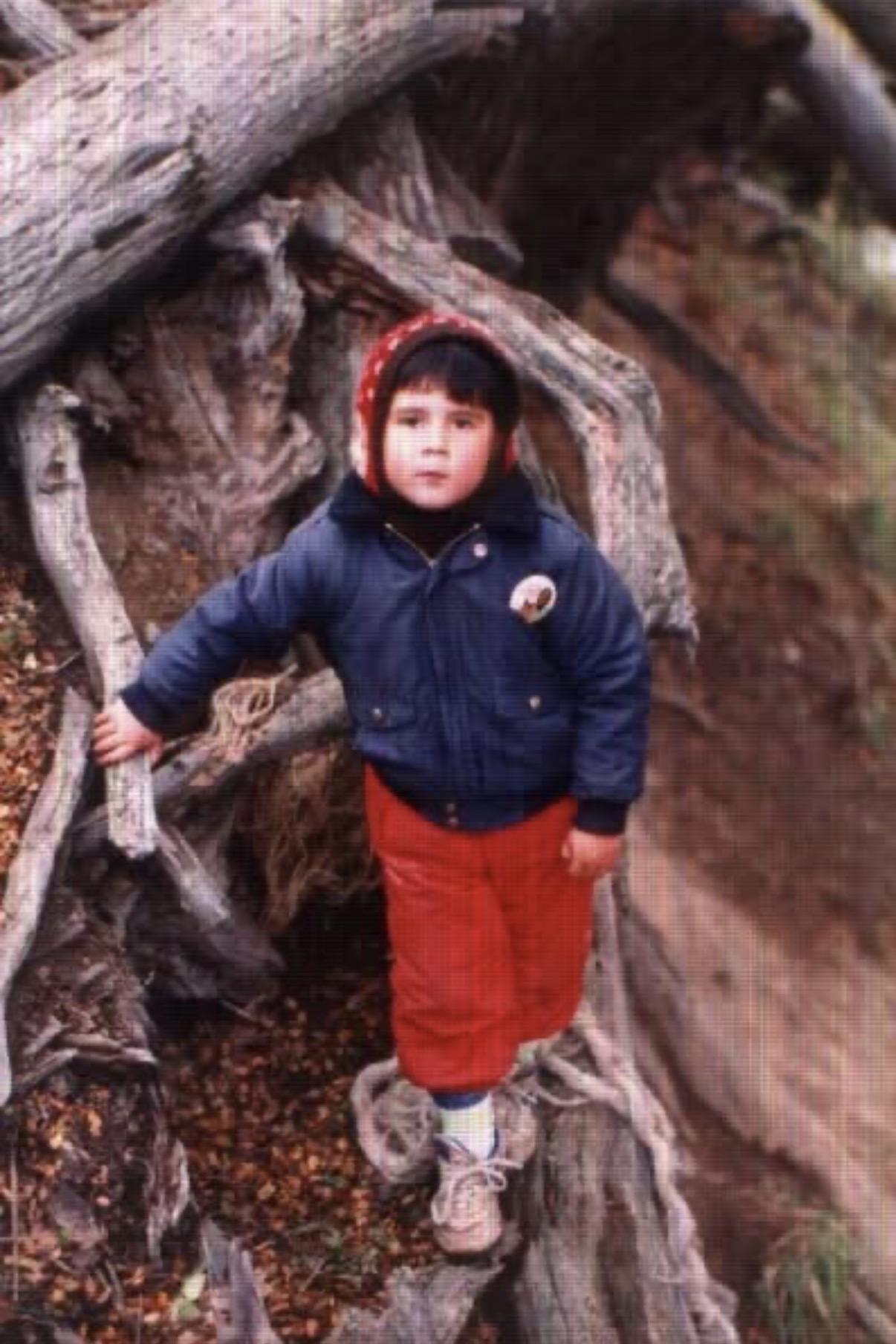
Maurice as a child growing up in Puerto Williams, on Navarino Island in southern Chile. This was the environment where he grew up, before he discovered kayaking.
During a family trip to Santiago, a friend of my family who was an instructor with the Chilean Canoe Federation invited me to paddle on a small lake. He had several different boats, and I tried everything I could: sea kayaks, whitewater kayaks, and racing kayaks.
The racing kayak was incredibly unstable. It took me days just to stay upright, but once I finally found the balance, I remember being amazed by how far it traveled with every stroke. The river kayak was completely different: slower, but playful and incredibly maneuverable. I was fascinated by the fact that boats that looked relatively similar could behave so differently on the water.
That experience stayed with me.
Back in Puerto Williams, there were few people to learn from, so much of my early kayaking was self-taught. I studied whatever books, magazines, and videos I could find. I also spent time talking with sailors who stopped in Puerto Williams on their way to Antarctica. Some carried sea kayaks aboard their yachts, and I would watch how they used, maintained, and repaired them.
Years later, I studied Expeditions and Ecotourism at university and began receiving formal training in kayaking and rafting. In 2015, I started working as an expedition guide in the polar regions, first in Greenland and the Arctic and eventually in Antarctica.
A major turning point came when I traveled to Annapolis and completed my ACA Coastal Kayaking Instructor Training with Tom Nickels.
Becoming an instructor changed the way I understood kayaking. It was not simply about learning more strokes or rescues. The ACA gave structure to knowledge I had accumulated intuitively over many years: understanding wind, waves and currents, reading a coastline, managing groups, evaluating risk, and, perhaps most importantly, knowing when to continue and when to turn around.
It gave me a framework for turning experience into judgment, and judgment into something I could teach others.
Today, I lead kayak programs on Antarctic expedition ships. Every time I take people onto the water, I still recognize something of that ten-year-old boy discovering how differently each kayak moved across a quiet lake in Chile.
The water has become much colder since then, but the fascination is exactly the same.
About the Author
Maurice Van de Maele joined the ACA in 2018 is an ACA-certified Coastal Kayaking Instructor. Maurice grew up in Puerto Williams on Navarino Island in southern Chile and now works as an expedition guide and leads kayak programs in the polar regions.
This story is published as part of the 2026 ACA Story Project, a month-long collection of stories written by ACA members. Without opportunity, these stories wouldn’t exist. That’s what the ACA does. Through education, stewardship, competition, and club support, we create opportunities for paddlers of all abilities. Your gift helps write the next chapter. Help us raise $25,000 by December 1 for the next paddler, and the one after that.