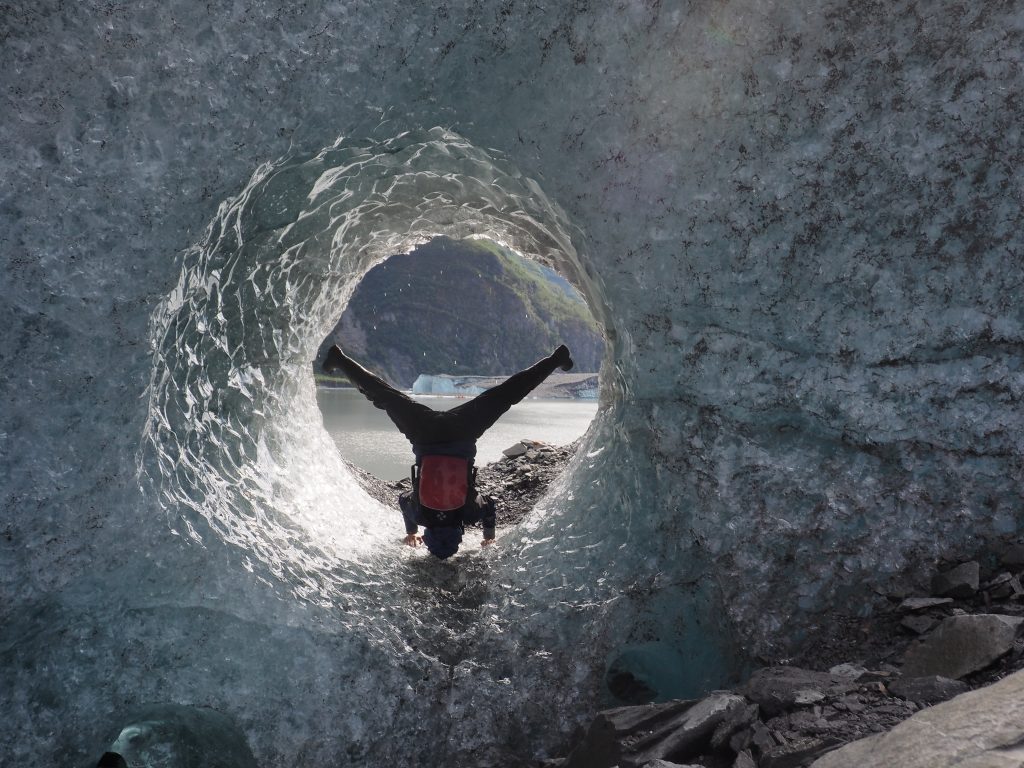
I started whitewater paddling in 2006 while attending Brevard College in North Carolina. There, I met a great group of paddlers, including a stereotypical nomadic outdoor guy named Rhane. After graduation, Rhane eventually landed in Valdez, Alaska, working as a glacier kayaking guide. In September 2015, I decided to visit him for what I thought would be an incredible Alaskan adventure.
Things got interesting almost immediately.
Rhane lived in crowded guide housing, where people slept on couches, floors, and inflatable mattresses. There wasn’t a bed available for me. His first suggestion was that I sleep in a tent on the patio, but the freezing temperatures and relentless wind quickly eliminated that possibility. His second suggestion was sharing a bedroom with him, his girlfriend, and his grandfather, whose thunderous snoring made sleep impossible. Eventually, a guide nicknamed Bagel generously surrendered his bedroom and went camping so I would have somewhere to sleep.
Unfortunately, Rhane hadn’t taken any time off work during my visit. I spent several days wandering around Valdez, exploring trails, and occasionally accompanying his guided kayaking trips. Finally, he announced that we were going on an adventure: paddling the beautiful, glacier-fed Tonsina River.
Even better, his grandfather owned a four-seat bush plane and offered to fly us to the river while another friend, Jared, transported our boats and equipment by road. I was thrilled at the prospect of seeing Alaska’s glaciers and mountains from the air. There was just one problem: I get motion sickness in practically everything that moves.
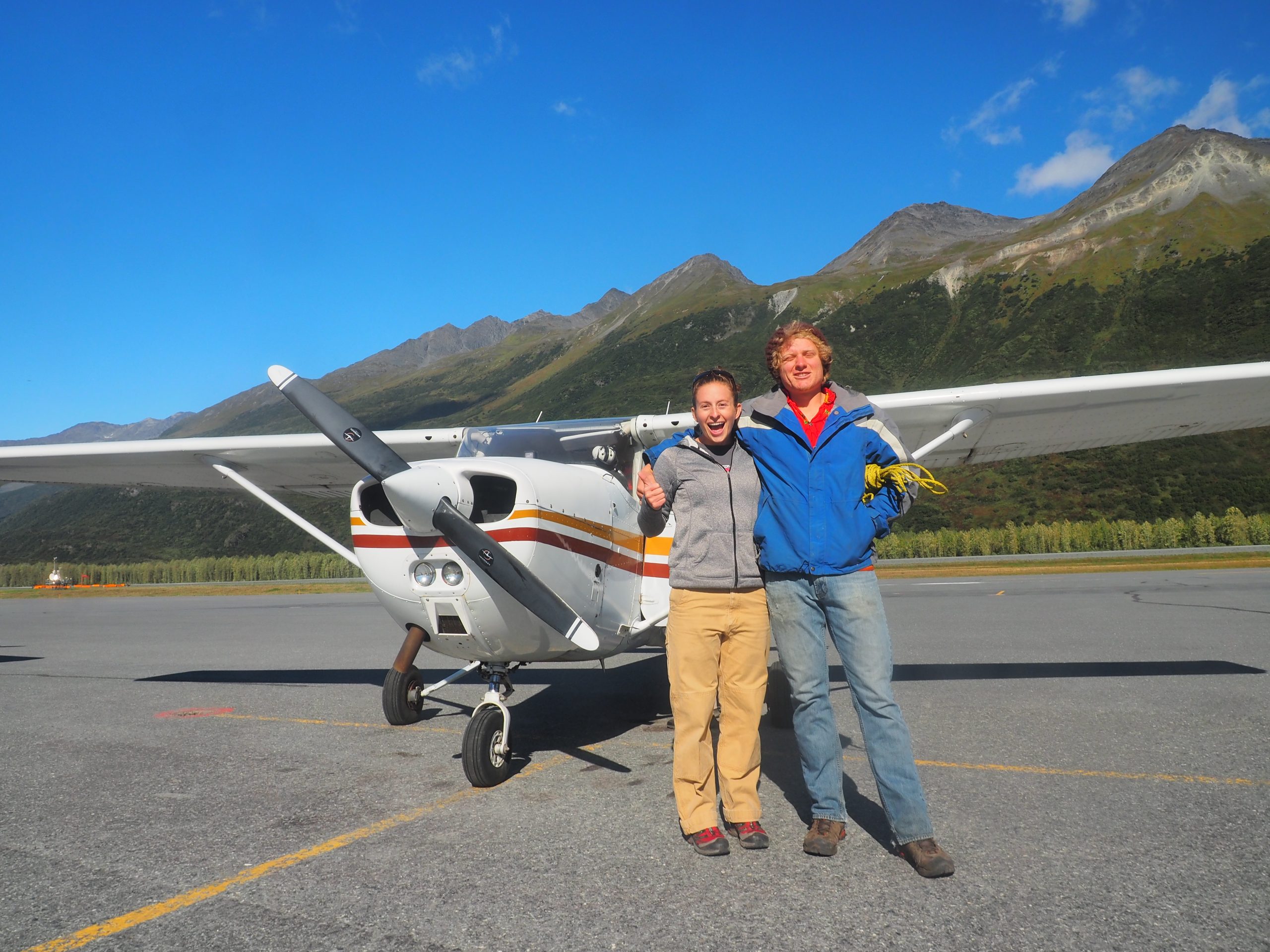
Rhane and his grandfather sat up front, while another friend, Lawton, and I squeezed into the back. Almost immediately after takeoff, the turbulence started. The scenery was spectacular, but I quickly became nauseated. Then Lawton started vomiting.
Watching him throw up made my situation exponentially worse. I desperately reached for an airsickness bag, only to discover it was shrink-wrapped in plastic that I couldn’t open. In a moment of panic, I grabbed Lawton’s already-used bag and threw up into it. He managed to open the new one, and we continued vomiting in tandem as the plane bounced through the sky.
At one point, the plane dropped so suddenly that the contents of my bag splashed directly into my face. I screamed in disgust. Shortly afterward, the soggy bottom of the paper bag disintegrated, dumping everything into my lap.
Meanwhile, Rhane was repeatedly punching his grandfather in the arm. I couldn’t understand why until I later learned that his grandfather had severe sleep apnea and was actually falling asleep while piloting the plane! Rhane was desperately trying to keep him awake.
Our anticipated 30-minute flight stretched to nearly an hour. When we finally landed, I practically fell out of the plane, covered in vomit, thoroughly humiliated, and unbelievably relieved to be alive.
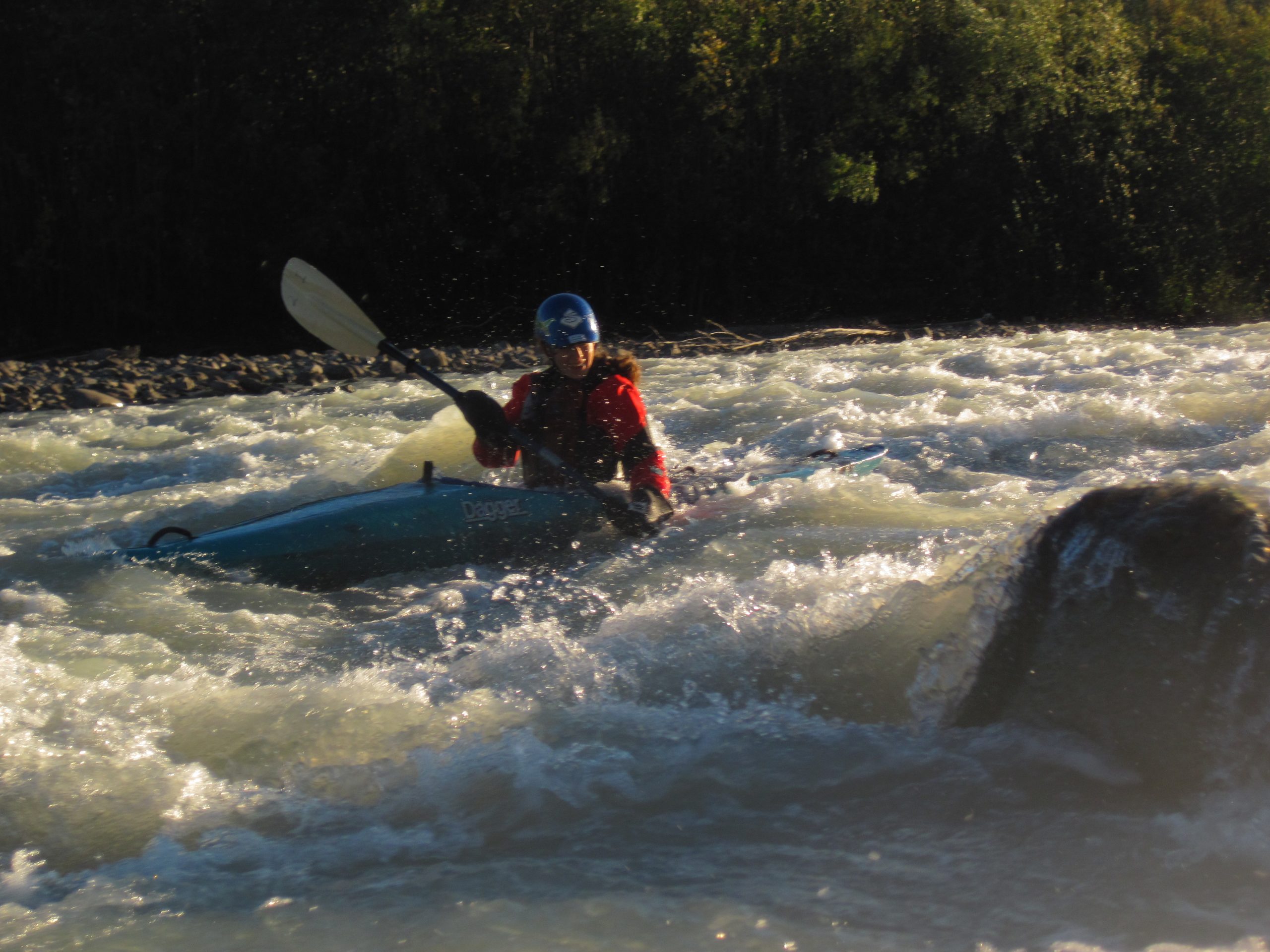
After recovering on the tarmac, I was faced with another decision. It was already late afternoon, but Rhane assured me that the river trip would be wonderful. He described approximately six miles of beautiful whitewater, and everyone in our group was an experienced paddler. Despite my exhaustion, I agreed. The river was spectacular. We paddled through gorgeous Alaskan scenery in a mixture of kayaks and packrafts. But after what felt like six miles, I asked Rhane how much farther we had to go.
“Oh, I forgot to tell you. After the whitewater, there’s about fourteen miles of flatwater.”
Fourteen miles.
I was exhausted, hungry, and cold. I’d vomited everything I’d eaten that day, and nobody had brought food. We continued paddling for hours as daylight disappeared. By the time we reached our takeout, a remote gravel bar, it was probably close to midnight. We had no food, no water, no dry clothes, and no sign of our shuttle driver. We hiked up to a deserted road and spent hours doing jumping jacks to stay warm in the freezing September temperatures. Eventually, we decided to stand in the road so the next passing vehicle would have to stop.
After another two or three hours, headlights finally appeared. To our enormous relief, it was Kyle, our shuttle driver. But Kyle emerged from his truck sobbing uncontrollably. We learned that he had stopped for gas on his way to collect us, and one of his two huskies had been struck and killed by a vehicle. He had spent the intervening hours burying his beloved dog. Suddenly, our frustration at being stranded was overshadowed by his heartbreaking loss.
Unfortunately, Kyle’s pickup truck had only two seats and a camper shell. Somehow, Rhane, Kyle, his remaining husky, and I crammed into the cab, practically sitting on one another, while the other paddlers piled into the back with our equipment. We were cold, wet, exhausted, and undoubtedly smelled terrible.
Somewhere around 3 a.m., we discovered a gas station restaurant that still had its lights on. The Russian-speaking staff welcomed our bedraggled group inside and prepared warm soup, food, and drinks. I remember eating practically everything in sight. After the endless disasters of the previous day, that unexpected kindness was extraordinary.
Eventually, we returned to Valdez. With nowhere comfortable to sleep, I curled up behind the cash register at Rhane’s kayaking company for an hour or two before they opened for business. Then I packed my belongings and left.
To this day, it remains the craziest paddling trip I’ve ever experienced.
Looking back, the entire adventure reminds me of the survival novel Hatchet. We could have crashed in the Alaskan wilderness with a sleeping pilot, suffered serious consequences from exposure after paddling twenty miles without adequate supplies, or spent the night stranded on a remote road. Instead, I survived a vomit-covered bush plane ride, an unexpectedly exhausting river trip, a freezing night waiting for our shuttle, and a crowded midnight truck ride, only to find salvation in a tiny Russian restaurant in the middle of Alaska.
It was one of the most beautiful places I’ve ever paddled, and without question, one of the most ridiculous adventures of my life.
About the Author
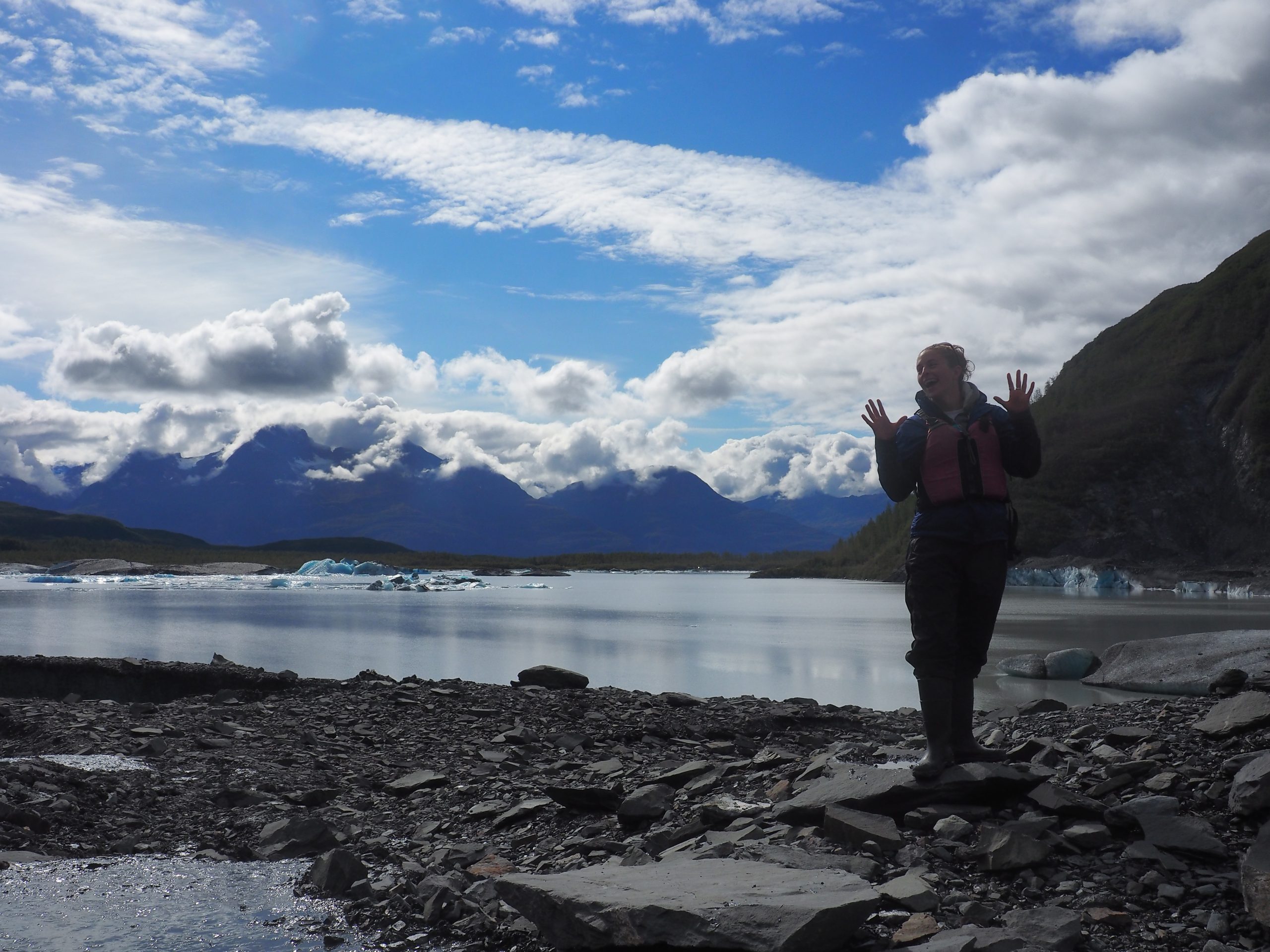
Kelsey Bracewell is the ACA’s Education, Insurance and Membership Director and its longest-serving employee, with more than 15 years at the organization. An ACA Certified Whitewater Kayaking Instructor, she first joined the ACA as a member in 2008 and lives in Fredericksburg, Virginia, where she also works part-time as a wildland firefighter for the Virginia Department of Forestry.
This story is published as part of the 2026 ACA Story Project, a month-long collection of stories written by ACA members. Without opportunity, these stories wouldn’t exist. That’s what the ACA does. Through education, stewardship, competition, and club support, we create opportunities for paddlers of all abilities. Your gift helps write the next chapter. Help us raise $25,000 by December 1 for the next paddler, and the one after that.