I caught my first glimpse of paddling at summer camp when I was 10 or 11 years old — the kind of thing so many paddlers say started it all. But if I’m honest, it didn’t really take hold until after college, when I began racing beginner slalom events often set up by Ledyard Canoe Club.
Ledyard is the oldest collegiate canoe club in the country, sitting right on the Connecticut River in Hanover, New Hampshire, and that’s where I learned gate work and to paddle easy courses. My first husband, Jim, and I paddled there under the guidance of Jay Evans, who went on to coach the 1972 U.S. Olympic Slalom team and led the USA Wildwater World Championships team from 1969 to 1972. That’s the kind of coaching that turns a camp pastime into a way of life.
After college, Jim and I moved to New York and started paddling with the Kayak & Canoe Club of New York. That’s where we started building our own kayaks, and Jim designed his first canoe.
By the early 1970s, we had decided New York City wasn’t for us. We loaded two kayaks and a canoe onto the roof of a Volkswagen bus we had made into a camper and headed west. Our big highlight was when we were invited to join a private trip down the Colorado River through the Grand Canyon which we later learned was the first trip in which women kayaked the Canyon. We didn’t have the money to pay for it, but Doc Blackadar took our boats in trade for a spot on the trip. I swam a lot on that one but it was quite the experience.
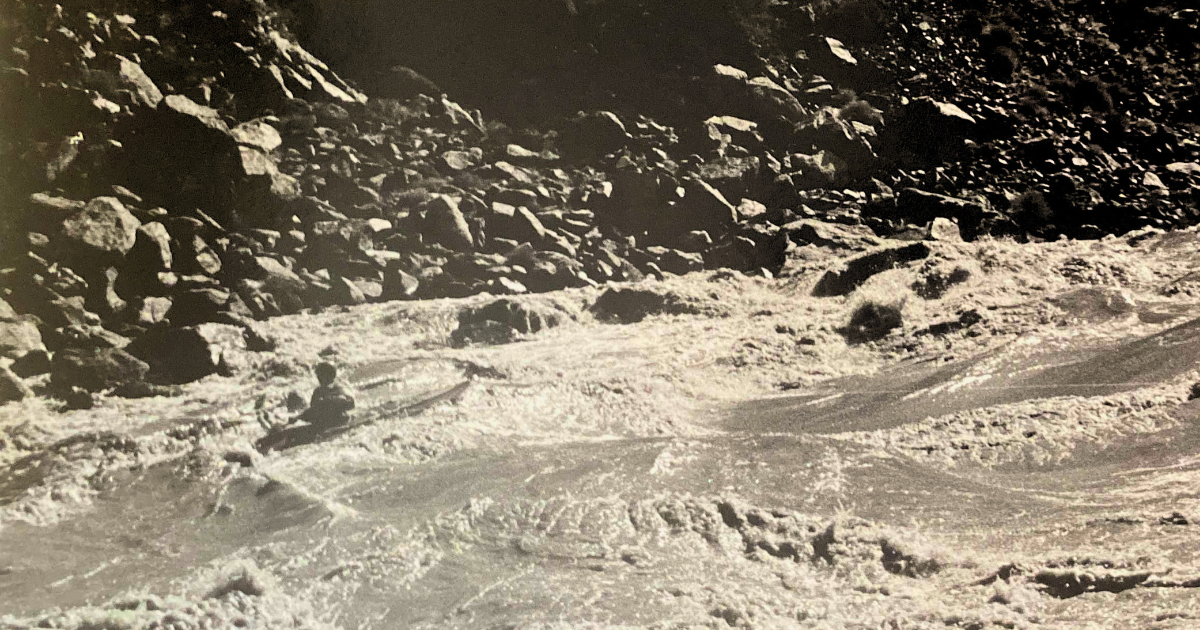
Kay paddling Hermit Rapid on the Colorado River in the early 1970s
By the time we got to Seattle, the jobs that had pulled us west had fallen through. So, we turned around, went back to Vermont, and did the only thing that made sense to us: we started building canoes. That was 1970, and that’s how Mad River Canoe was born — one canoe at a time, in Vermont, until it wasn’t one at a time anymore.
Running that business meant a lot of what I’d call R&D. Though really, it meant I got to go on many expeditions. You can put a lot of stuff in a canoe to test its handling and durability. I spent time paddling more than twelve rivers across the Northwest and Yukon Territories of Canada testing what our boats could do — and what I could do in them.
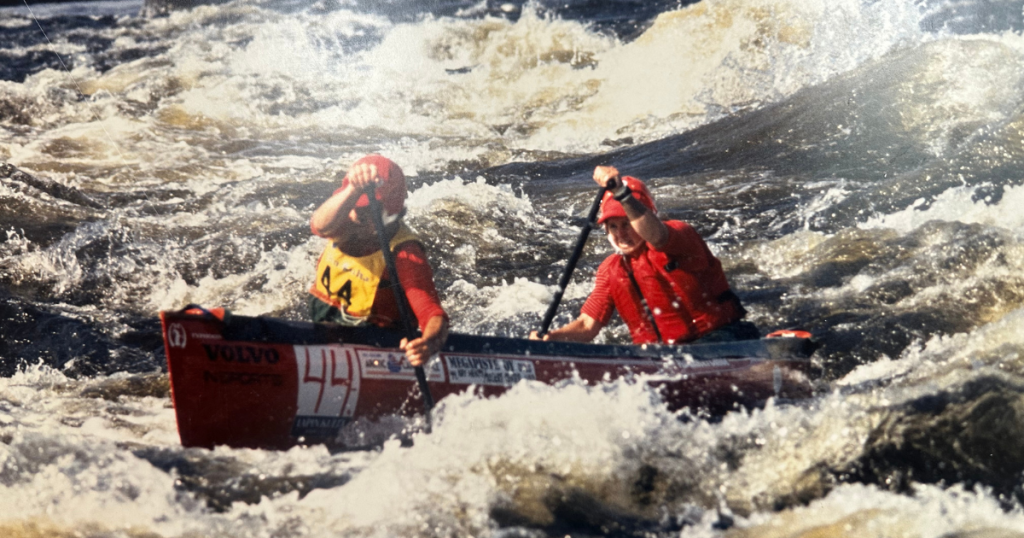
The biggest race I ever did was with my second husband. We raced the Arctic Canoe Race between Sweden and Finland — a 300-mile race through 10- to 15-foot waves.
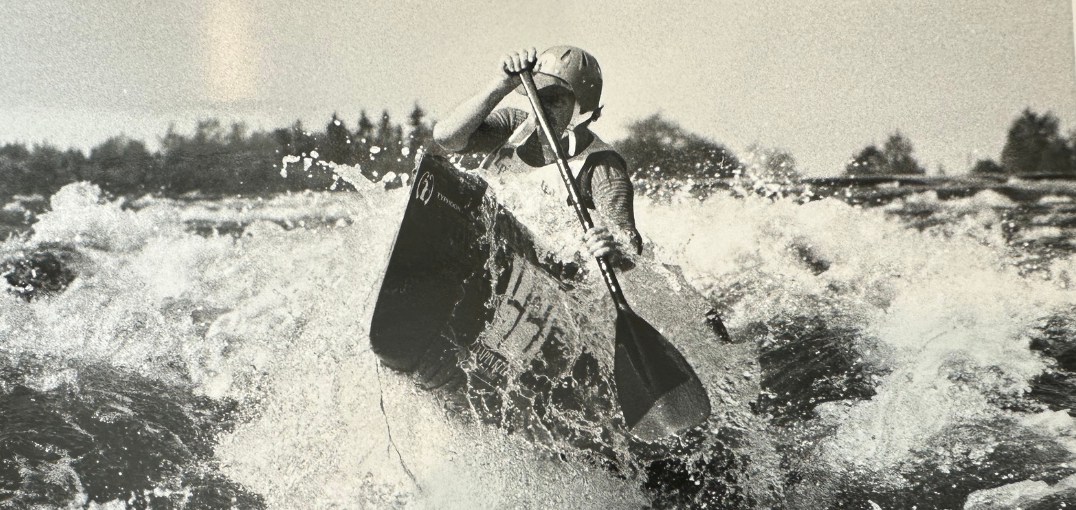
After selling Mad River Canoe in 1998, I stepped back from the paddlesport business and turned my attention back to the rivers themselves — this time to protect a place for others to paddle. Since then, I’ve worked, alongside my husband Rob Center, to create the Northern Forest Canoe Trail: a 740-mile water trail connecting Maine, Vermont, New Hampshire, Quebec, and New York, much of it following historic Native American trading and transport routes.
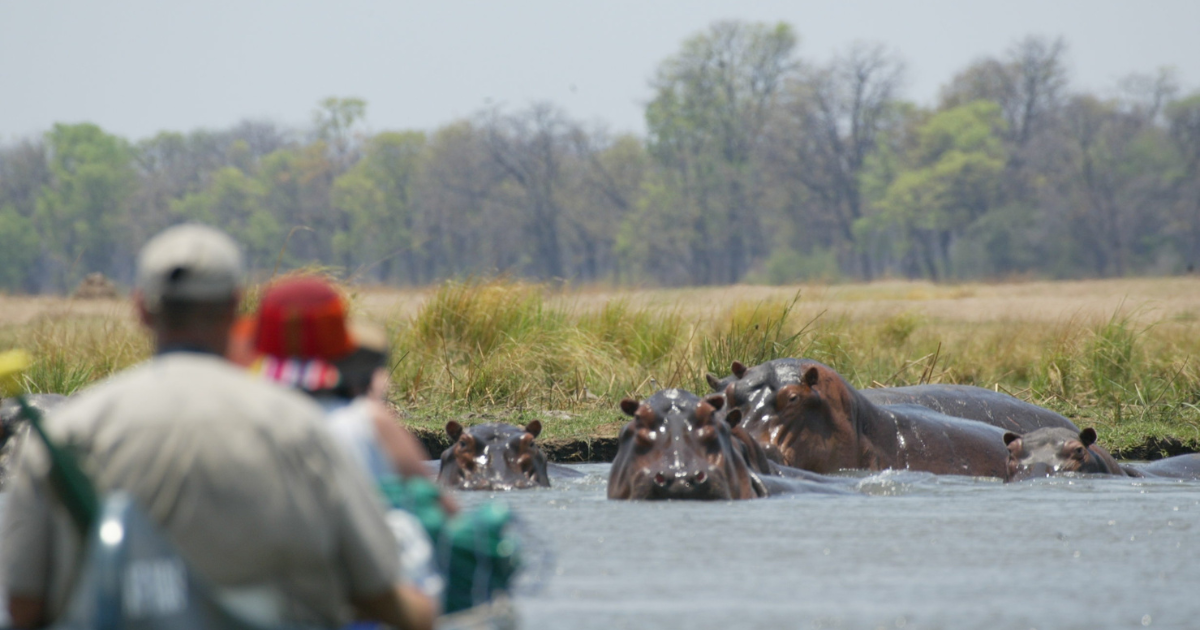
Another unforgettable highlight from over the years included paddling the lower Zambezi River in Zimbabwe, Africa. Paddling the Zambezi is about more than navigating rapids; you have to watch the wildlife too. If the hippos knock you over, the crocodiles will finish you off!
These days, I have spent time mentoring female athletes who are transitioning out of Olympic-level competition and into the business world and working with the State of Maine to encourage the growth of outdoor recreation through an organization called Maine Outdoor Brands. It’s a different kind of current to navigate, but the same instincts apply — read the water, trust your training, and don’t be afraid to trade a boat for a good trip.
I am very lucky to have had these opportunities to travel and paddle in so many unique environments. Over the years I have learned a lot about expedition style paddling. Though some things have changed now that communications technology has advanced so much, I still believe that on a proper expedition you can’t always rely on technology. Here are my top 6 tips for a successful expedition:
- Make sure you have paper maps to navigate by if needed. GPS is not always available!
- Test all your gear ahead of time. Check batteries, try on clothes, etc. There is no backup once you are on the river!
- Check rules for flying in fuel canisters for your stove. That can be challenging and in barren lands, wood fires aren’t always an option.
- Make sure you have a good boat repair kit and know how to use it. Duct tape may not always be sufficient!
- At least one person in the party ought to have medical skills. A good first aid kit and wilderness first aid experience is helpful, but we always try to invite a doctor, nurse or veterinarian on all our wilderness trips.
- Notify someone at home of your plans and give them the wilderness flight company contact information.
Overall, be flexible. A sense of humor and a plan B if weather or an accident changes your itinerary is key. Safe paddling and enjoy! Paddling can take you to some incredible places.
About the Author
Kay Henry is an ACA lifetime member, ACA Hall of Fame inductee, businesswoman, and conservation advocate. In 2000, she received the “Legends of Paddling Award” from the ACA for contributions to paddlesports for her work on the national level and on the Northern Forest Canoe Trail.
When we connected with Kay this year, she had just returned from a three-week trip in Alaska and would soon be heading out on another adventure. In Alaska and the Canadian Arctic, Kay has paddled over 12 different rivers spending a month or so of wilderness canoeing in each. In Alaska, they include the Koyukuk and Utukok Rivers; Yukon Territory, the Tatshenshini, Snake, Tischu, MacMillan, Mountain, Wind, Natla-Keele Rivers; Northwest Territories (now in Nunavut), the Ellice, Horton, and Hornaday Rivers.
This story is published as part of the 2026 ACA Story Project, a month-long collection of stories written by ACA members. Without opportunity, these stories wouldn’t exist. That’s what the ACA does. Through education, stewardship, competition, and club support, we create opportunities for paddlers of all abilities. Your gift helps write the next chapter. Help us raise $25,000 by December 1 for the next paddler, and the one after that.